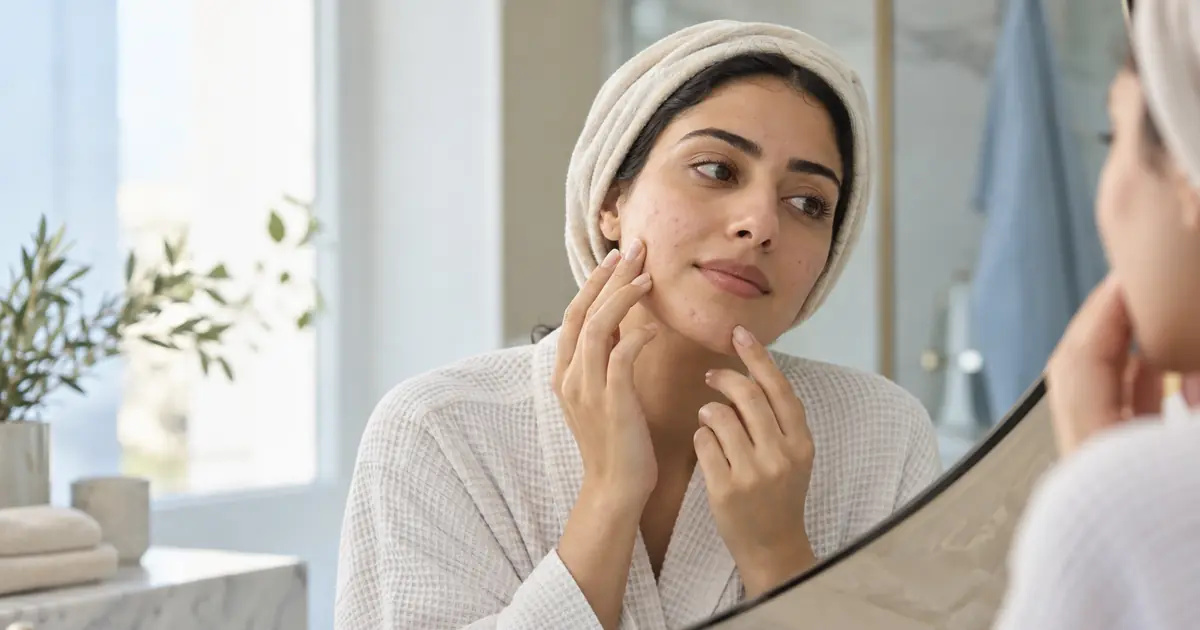
Skin purging is often blamed when pimples appear after starting retinol, an exfoliating acid, or another active skincare product. The timing can make it seem as if the new product is “bringing everything to the surface.” A short adjustment period may be possible in some situations, but every new breakout should not automatically be called purging. Ordinary acne, clogged pores, irritant contact dermatitis, and allergic reactions can look similar at first.
Skin purging is a popular term for a temporary acne-like flare after introducing an ingredient that affects cell turnover or clogged pores. It is not a formal diagnosis, and there is no single test or guaranteed timeline. Mild spots that appear in familiar acne-prone areas and gradually settle may fit the pattern. Persistent acne, intense burning, itching, swelling, or lesions in unusual areas point more strongly toward a breakout or skin reaction.
Dubai adds another layer of complexity. Heat, humidity, sweat, friction, frequent sunscreen use, and dry indoor air conditioning can all influence oiliness and irritation. These factors may make a reaction look worse, but they do not prove that skin purging is happening.
Table of Contents
What Skin Purging Means
The phrase skin purging is widely used in skincare discussions, but it is not a medical diagnosis. It usually describes a temporary increase in whiteheads, blackheads, or inflamed spots after someone begins an active ingredient that changes how skin cells shed or how pores stay clear. The proposed explanation is that existing microscopic clogged pores become visible sooner as the treatment begins to work.
That explanation should be treated carefully. A review indexed in PubMed found no primary clinical-trial evidence showing that topical retinoids routinely worsen acne when treatment begins. The authors concluded that a true retinoid flare is unlikely for most people and that early worsening may sometimes reflect the natural course of acne.
This does not mean that every report of purging is imaginary. It means that timing alone cannot prove the cause.
A safer approach is to use “possible purging” as a working description while watching the pattern, severity, and direction of change. If the skin steadily improves, the reaction may have been a temporary adjustment. If it continues to worsen, spreads, becomes painful, or develops strong signs of irritation, another explanation is more likely.
Which Ingredients Are Linked With Possible Purging?
Possible purging is most often discussed after products that affect cell turnover or help clear blocked pores. These ingredients can also cause irritation, so the presence of one does not confirm purging.
- Topical retinoids and retinol: Adapalene, tretinoin, tazarotene, retinol, and retinal can influence cell turnover and help keep pores clear. The American Academy of Dermatology recognizes topical retinoids as established acne treatments. Dryness, stinging, peeling, and irritation are more clearly documented early effects than a routine acne flare.
- Salicylic acid and other exfoliating acids: Salicylic acid helps unclog pores and is commonly described as a BHA in skincare. Glycolic and lactic acids are AHAs that exfoliate the skin’s surface. All can irritate the skin when the strength, frequency, or combination is unsuitable.
- Prescription acne treatments: Prescription products require individual guidance. Oral isotretinoin is especially different from an over-the-counter serum. Any worsening while taking it should be discussed with the prescribing clinician rather than managed as a routine cosmetic “purge.”
Moisturizers, basic cleansers, hyaluronic acid, niacinamide, vitamin C, and sunscreen are not usually expected to create a purging process simply because they are new. They can still cause clogged pores, irritation, or allergy depending on the formula and the person using it. A breakout after one of these products should not be dismissed automatically as purging.
Signs That May Fit Skin Purging
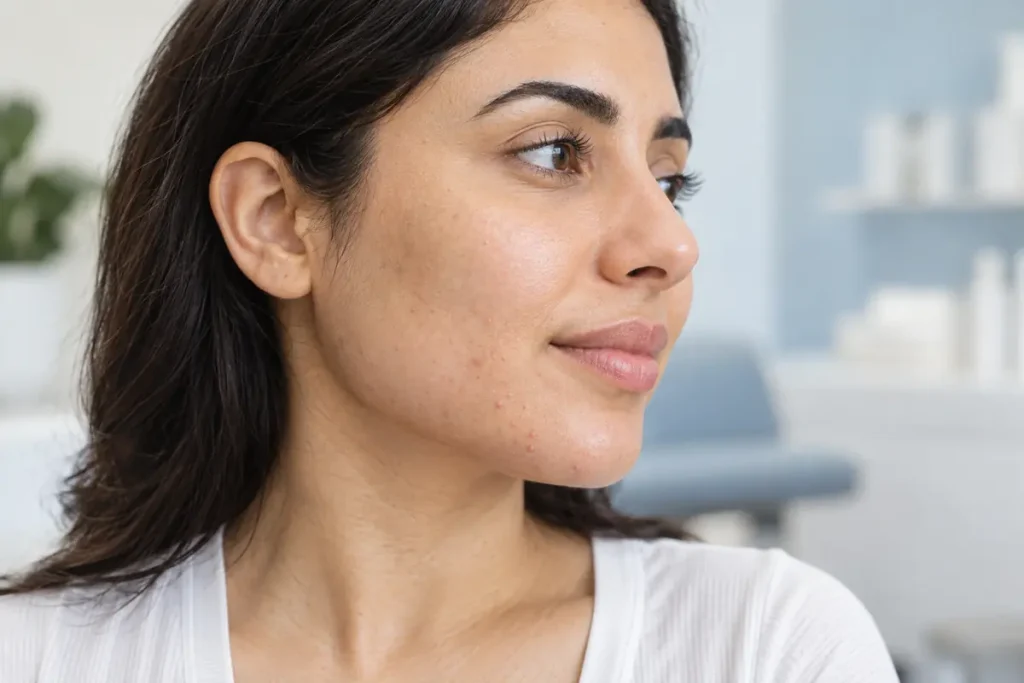
No single sign confirms skin purging, but the following pattern may make it more plausible:
- The change began soon after introducing a retinoid, exfoliating acid, or acne treatment.
- The spots appear mainly where you already tend to develop clogged pores or pimples.
- The lesions resemble your usual acne, such as small whiteheads, blackheads, or inflamed pimples.
- The reaction is mild enough to manage and is not dominated by burning, intense itching, swelling, or blistering.
- The number and severity of new spots begin to decrease rather than continuing to escalate.
These clues are observations, not a diagnostic checklist. Acne can fluctuate naturally, especially with hormonal changes, stress, occlusive products, friction, or changes in a skincare routine. A qualified professional may need to examine the skin when the pattern is unclear.
A Realistic Skin Purging Timeline
There is no scientifically established countdown that applies to every person or every ingredient. The often-repeated four-to-six-week “purging rule” should not be used as permission to tolerate steadily worsening skin.
A more useful timeline is based on monitoring symptoms and treatment response.
| Period | What to Monitor | Practical Response |
|---|---|---|
| Before starting | Baseline acne, redness, dryness, and current products | Photograph the skin and introduce only one new active product. |
| First 1–2 weeks | Dryness, mild stinging, peeling, or new acne-like spots | Follow the product label. Do not add another active ingredient. Watch the severity and location. |
| Weeks 3–4 | Whether new lesions are slowing, remaining stable, or increasing | Simplify the supporting routine and reassess if the skin is becoming more irritated. |
| Weeks 4–8 | A clear trend toward fewer breakouts or continued worsening | Seek professional advice if there is no improvement, the diagnosis is uncertain, or marks and scars are developing. |
| Beyond 8 weeks | Persistent or spreading acne-like lesions | Do not keep waiting solely because the reaction has been labeled purging. Arrange an assessment. |
The American Academy of Dermatology notes that an effective acne treatment may produce fewer breakouts within four to eight weeks, while clearer skin can take around 16 weeks.
Those figures describe treatment response, not a guaranteed purging duration. They provide a sensible point for reassessment.
Skin Purging and Breakouts Compared
The comparison below can help organize what you observe. It cannot replace an examination, especially when lesions are painful, itchy, widespread, or leaving marks.
| Feature | Possible Purging | Regular Breakout | Irritation or Allergy |
|---|---|---|---|
| Typical trigger | A newly introduced retinoid, exfoliating acid, or acne treatment | A product, hormones, stress, friction, occlusion, or the natural course of acne | Any irritating or allergenic ingredient |
| Location | Often in familiar acne-prone areas | Familiar or new areas | Usually where the product touched; an allergic reaction may spread |
| Common Symptoms | Acne-like spots with little or manageable irritation | Tender or inflamed pimples, blackheads, or whiteheads | Burning, stinging, itching, swelling, marked redness, peeling, or blisters |
| Direction over time | Should begin to settle rather than continually worsen | May persist or recur without suitable treatment | Often worsens with continued exposure |
| Best next step | Monitor closely and use the active as directed | Review the routine and consider professional acne advice | Stop the suspected cosmetic product and seek care if severe. Contact the prescriber before changing prescription treatment. |
Purging or Skin Irritation?
Irritation is one of the most important conditions to separate from skin purging.
According to DermNet guidance on irritant contact dermatitis, irritants can damage the skin’s surface faster than it can repair itself. Burning and pain may be more prominent than itching, and the skin may develop dryness, cracks, redness, swelling, or blisters. Retinoids and benzoyl peroxide are among the topical medications that can contribute to irritant dermatitis.
Redness can be less obvious in medium and darker skin tones. Pay attention to warmth, swelling, itching, tenderness, a change in texture, or new darkening as well as visible redness. Repeated irritation can damage the skin barrier and contribute to post-inflammatory pigmentation.
An allergy is different again. The US Food and Drug Administration lists possible cosmetic allergy symptoms including hives, itching, rash, peeling, facial swelling, wheezing, and, rarely, anaphylaxis.
Facial or tongue swelling, trouble breathing or swallowing, faintness, or widespread hives requires urgent medical attention.
Can Dubai Weather Make the Reaction Worse?
Dubai weather does not create skin purging, but it can complicate the picture. Heat, sweat, friction, and occlusive products may contribute to acne-like bumps. Strong air conditioning can increase dryness and make an active product feel more irritating.
Frequent sun exposure also matters because some active ingredients can increase sensitivity. The FDA warns that cosmetic AHAs may increase sensitivity to ultraviolet radiation while they are used and for up to a week after stopping.
Its guidance for products containing salicylic acid also advises using sun protection and stopping the product if prolonged stinging or irritation develops.
For more local skincare advice, read How the Gulf Climate Affects Your Skin and Sun Protection in Dubai.
What to Do When Breakouts Start After a New Product
The safest response depends on the severity of the reaction and whether the product is cosmetic, available over the counter, or prescribed.
- Identify what changed: Write down the product name, active ingredients, start date, frequency, and every other active product in your routine. More than one recent change makes the cause difficult to identify.
- Stop adding products: Do not introduce another acid, scrub, mask, or spot treatment to “fix” the reaction. A crowded routine increases irritation and removes the ability to identify the trigger.
- Keep the supporting routine simple: Use a gentle cleanser, a fragrance-free moisturizer that suits acne-prone skin, and a broad-spectrum, water-resistant SPF 30 or higher. The AAD recommends non-comedogenic sunscreen for acne-prone skin.
- Use the active safely: Follow the product label. If an over-the-counter active causes mild dryness or stinging, reducing its frequency may be reasonable within its directions. If the product was prescribed, contact the prescriber before changing the treatment plan.
- Avoid picking: Squeezing or scratching increases inflammation and the risk of dark marks and scars. If marks have already developed, read about Acne Scars Treatment in Dubai.
- Track the trend: Take one photograph each week in similar lighting. A weekly view is more useful than checking the mirror several times a day. Note whether lesions are becoming fewer, smaller, or less inflamed.
If your skin is naturally reactive, the guidance in Sensitive Skin in Dubai can help you build a gentler routine.
Readers with excess oil or clogged pores can also review the Best Skincare Routine for Oily Skin.
When to Stop and Seek Professional Advice
Stop using a new non-prescription cosmetic and arrange professional advice if you develop persistent burning, marked redness, swelling, intense itching, cracking, blistering, or a rash that spreads.
Seek Immediate Medical Care If:Facial, lip, tongue, or eye swelling, difficulty breathing, or a tight throat after a new product are signs of a serious reaction. Rinse the product off and seek emergency care immediately.
An assessment is also appropriate when spots are deep or painful, acne is leaving dark marks or scars, the eruption appears in unusual areas, or the skin continues to worsen rather than showing improvement within several weeks.
Sudden clusters of itchy, uniform bumps can have causes other than acne and should not be labeled purging without an assessment.
If you are pregnant, trying to become pregnant, or breastfeeding, ask a healthcare professional before using acne treatments. The American Academy of Dermatology advises avoiding retinoids during pregnancy, including prescription and over-the-counter forms.
How to Introduce New Skincare More Safely
A slow, controlled introduction cannot prevent every reaction, but it makes problems easier to identify and reduces unnecessary irritation.
- Test first: The AAD suggests applying a new skincare product to a small test area twice daily for seven to ten days. This can reveal some irritant or allergic reactions, although it cannot predict whether a facial product will clog pores.
- Introduce one active at a time: Wait until the skin is stable before adding another retinoid, exfoliant, acne treatment, or brightening active.
- Start according to the label or treatment plan: More product and more frequent use do not create faster results. They often increase dryness and irritation.
- Protect the skin barrier: Use a gentle cleanser and suitable moisturizer. Avoid facial scrubs, cleansing brushes, and strong peels while the skin is adjusting.
- Use daily sun protection: Choose broad-spectrum SPF 30 or higher and reapply as directed, especially during outdoor exposure in Dubai.
The goal is not to force the skin through a reaction. The goal is to use an effective product at a level the skin can tolerate while recognizing early signs that the routine needs to change.
Frequently Asked Questions
Does Skin Purging Mean a Product Is Working?
No. A temporary change may happen after certain active ingredients, but worsening skin is not proof of effectiveness. The overall trend, tolerance, and eventual improvement matter more.
How Long Does Skin Purging Last?
There is no universal, clinically proven duration. Use four to eight weeks as a treatment review window rather than a promise that every reaction will resolve. Seek advice sooner if symptoms are severe or steadily worsening.
Can Retinol Cause Skin Purging?
Retinol and prescription retinoids affect cell turnover and can cause early dryness, stinging, or peeling. Some users report acne-like changes, but clinical evidence does not show that routine initial acne flaring occurs in most people.
Can Niacinamide or Vitamin C Cause Purging?
These ingredients are not typically associated with a classic purging mechanism. A reaction after using them may be related to irritation, the concentration, another ingredient in the formula, or an unrelated acne flare.
Can Moisturizer or Sunscreen Cause Purging?
Basic moisturizers and sunscreens do not normally speed cell turnover in the way associated with purging. If spots appear, consider whether the formula is irritating, too occlusive for your skin, or coincidental with another acne trigger.
Are Itchy Bumps a Sign of Purging?
Intense itching is not a typical reassuring sign. It can suggest irritation, allergy, dermatitis, or another acne-like condition. Stop using a new cosmetic product and seek advice if itching is persistent, spreading, or accompanied by swelling.
Should I Stop Retinol if I Start Breaking Out?
It depends on the severity of the reaction and whether the retinoid is prescribed. Mild dryness may sometimes be managed by adjusting the frequency and supporting the skin barrier.
Severe irritation, swelling, blistering, or progressive worsening requires professional advice. Contact the prescriber before changing a prescription treatment.
What to Remember About Skin Purging
Skin purging can be a useful description for a mild, temporary acne-like change after starting certain active products, but it should not become a reason to ignore persistent acne or skin damage.
Look at the trigger, location, symptoms, and direction of change. Keep your routine simple, protect your skin from the sun, and seek help when the reaction is painful, itchy, swollen, spreading, or not improving.
If you are unsure whether a new reaction is acne, irritation, allergy, or another skin condition, a professional skin assessment can help you choose a safer plan. Contact Derma One Sparkle to arrange a consultation.
Medical note: This article provides general education and does not replace diagnosis or treatment from a qualified healthcare professional.