

Oily skin often appears shiny, with enlarged pores and a tendency toward congestion or breakouts. Dubai’s heat and humidity may make excess shine harder to manage, while harsh cleansing can strip the skin barrier and cause irritation.
A skincare routine for oily skin should focus on gentle cleansing, a lightweight non-comedogenic moisturizer, suitable active ingredients and daily sunscreen.
These recommendations are consistent with guidance from the American Academy of Dermatology on managing oily skin with gentle cleansing, non-comedogenic products, moisturizer and daily sun protection.
Table of Contents
Understanding Oily Skin
Oily skin occurs when the sebaceous glands produce more sebum — the skin’s natural oil — than necessary to keep the skin adequately moisturized. This excess oil sits on the surface of the skin, often giving it a shiny appearance, particularly across the forehead, nose, and chin, an area commonly referred to as the T-zone.
Several factors influence how much oil the skin produces, including genetics, hormonal fluctuations, diet, stress levels, and environmental conditions. Heat and humidity, in particular, tend to stimulate increased oil production, which is why many individuals notice their skin becomes oilier during the hotter months of the year.
It is also worth noting that oily skin is not necessarily the same as acne-prone skin, although the two often overlap. Oily skin simply refers to excess sebum production, while acne involves a combination of excess oil, clogged pores, and inflammation. Understanding which applies to your skin helps in selecting the most effective routine and products.
Common Signs of Oily Skin
Recognizing the signs of oily skin helps in tailoring an effective skincare approach. Common indicators include:
- A persistent shine, particularly across the T-zone, that reappears a few hours after cleansing
- Enlarged or more visible pores
- A thicker skin texture compared to dry or normal skin types
- Frequent blackheads, whiteheads, or breakouts
- Makeup that tends to fade or slide throughout the day
- Skin that feels greasy to the touch, especially by midday
Many individuals with oily skin also experience combination skin, where the T-zone produces excess oil while the cheeks remain normal or even slightly dry. Identifying this pattern is important, as it influences how products should be applied across different areas of the face.
Step-by-Step Skincare Routine for Oily Skin
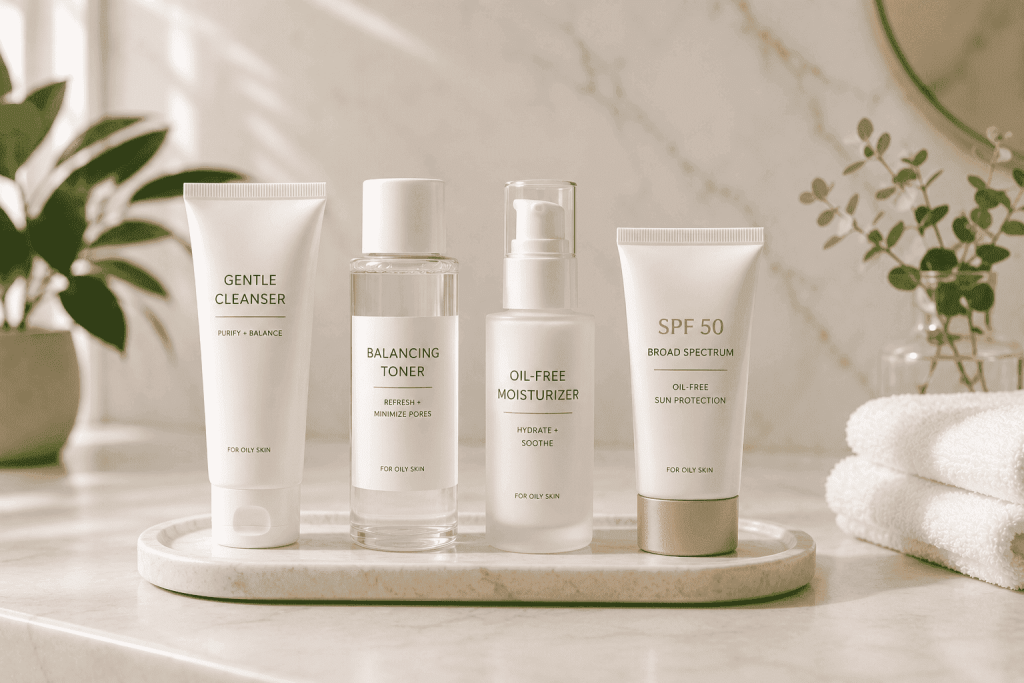
Morning Routine
Step 1 — Gentle Cleansing
Begin the day with a gel-based or foaming cleanser formulated for oily skin. Avoid cleansers that are overly stripping, as removing too much natural oil can trigger the skin to overcompensate by producing even more sebum.
Step 2 — Lightweight Toner
A toner containing ingredients such as niacinamide or witch hazel can help balance oil production and minimize the appearance of pores without over-drying the skin.
Step 3 — Oil-Free Moisturizer
Even oily skin requires hydration. Choose a lightweight, oil-free, and non-comedogenic moisturizer that hydrates without adding excess shine or clogging pores.
Step 4 — Broad-Spectrum SPF
A daily broad-spectrum sunscreen is essential for all skin types, including oily skin. Look for oil-free, matte-finish formulas specifically designed to avoid adding shine while still providing effective UV protection.
Evening Routine
Step 1 — Double Cleansing
In the evening, a double cleanse — starting with an oil-based cleanser to remove makeup, sunscreen, and surface impurities, followed by a gel cleanser — ensures the skin is thoroughly clean without excessive stripping.
Step 2 — Targeted Treatment
This is the ideal time to apply targeted treatments such as salicylic acid or retinoids, which help regulate oil production, unclog pores, and improve overall skin texture over time.
Step 3 — Lightweight Night Moisturizer
Finish with a lightweight, oil-free night moisturizer or gel that supports the skin’s overnight repair process without adding unnecessary heaviness.
Key Ingredients for Oily Skin
Choosing the right active ingredients makes a measurable difference in managing oily skin effectively.
Salicylic Acid is a beta-hydroxy acid that penetrates into the pores, dissolving excess oil and dead skin cells that contribute to congestion and breakouts.
Niacinamide helps regulate sebum production while also strengthening the skin barrier and reducing the appearance of enlarged pores.
Clay ingredients, such as kaolin or bentonite, absorb excess oil and are particularly effective in mask formulations used once or twice a week.
Retinoids support cell turnover, helping to keep pores clear and reduce the frequency of breakouts, while also offering long-term anti-aging benefits.
Hyaluronic Acid remains an important ingredient even for oily skin, as it provides lightweight hydration without adding oil or heaviness to the complexion.
Common Mistakes to Avoid
A skincare routine for oily skin can become less effective when harsh cleansing, skipped moisturizer or excessive exfoliation disrupts the skin barrier.
Over-Cleansing: Washing the face too frequently or using harsh cleansers strips the skin of its natural oils, prompting the sebaceous glands to produce even more oil in response. Cleansing twice daily is generally sufficient for most individuals with oily skin.
Skipping Moisturizer: Many individuals with oily skin avoid moisturizer altogether, assuming it will worsen shine. In reality, skipping moisturizer can disrupt the skin barrier and trigger increased oil production as the skin attempts to compensate for the lack of hydration.
Using Heavy or Comedogenic Products: Rich creams and oil-based products designed for dry skin can clog pores and worsen congestion in oily skin types. Always check that products are labeled non-comedogenic.
Over-Exfoliating: While exfoliation helps manage oily skin, excessive exfoliation can damage the skin barrier and lead to increased sensitivity and oil production. Two to three times a week with a gentle chemical exfoliant is generally sufficient.
Skipping Sunscreen: Some individuals avoid sunscreen due to concerns about added shine. Choosing the right oil-free, matte-finish formula eliminates this concern while providing essential protection against UV damage.
Professional Treatments for Oily and Congested Skin
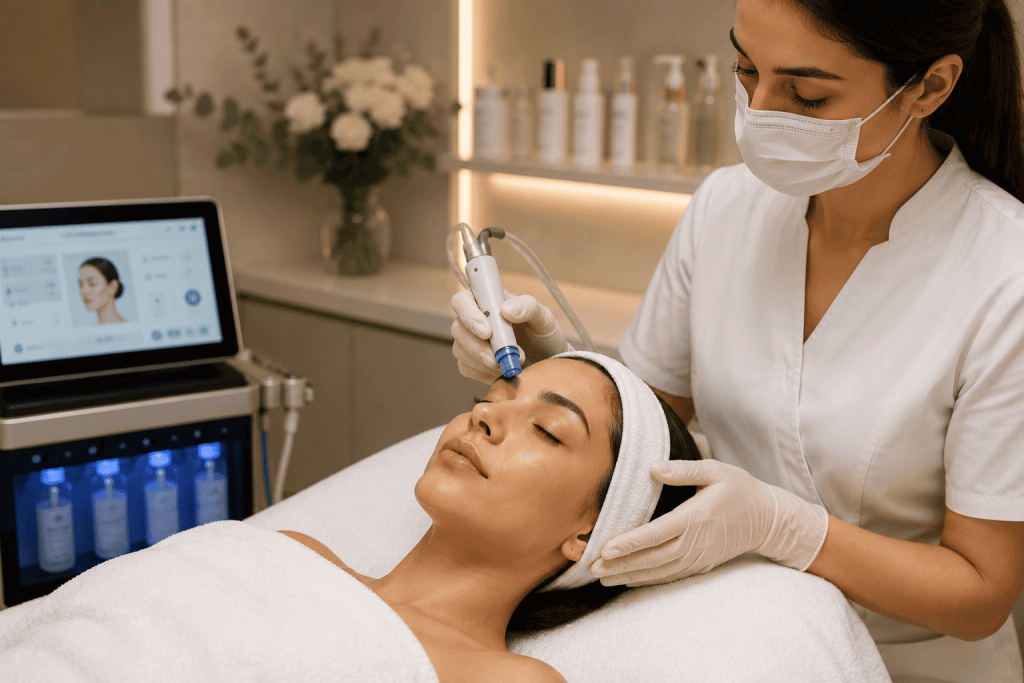
For individuals whose oily skin does not respond fully to a home skincare routine, professional treatments offer a more targeted approach to managing oil production, congestion, and related concerns.
Hydrafacial: Hydrafacial combines deep cleansing, gentle exfoliation, and painless extraction in a single session — making it particularly effective for oily and congested skin. The treatment removes excess oil and impurities from the pores while delivering balancing serums that support healthier, clearer skin over time.
Facial Treatments: A professionally customized facial can address oily skin through targeted deep cleansing and the use of products specifically suited to oil regulation. At Derma One Sparkle, every facial treatment is tailored to the individual’s skin type and concerns.
Acne Scar Treatment: For individuals dealing with the after-effects of breakouts caused by oily and congested skin, professional treatment can help improve skin texture and reduce the visible impact of past acne.
A consultation with a specialist at Derma One Sparkle can help determine the most effective combination of professional treatments and home care for your specific skin condition.
Lifestyle Factors That Influence Oily Skin
Beyond topical skincare, several lifestyle factors play a meaningful role in managing oil production.
Diet rich in refined sugars and dairy has been associated with increased oil production and breakouts in some individuals. A balanced diet with adequate hydration supports overall skin health.
Stress triggers the release of cortisol, which can stimulate the sebaceous glands to produce more oil. Managing stress through adequate sleep and relaxation techniques can have a positive impact on oil regulation.
Touching the Face frequently transfers oil, bacteria, and impurities from the hands to the skin, often worsening congestion and breakouts. Minimizing unnecessary face touching is a simple but effective habit to adopt.
Pillowcases and Towels that are not changed regularly accumulate oil and bacteria, which can be transferred back to the skin. Washing pillowcases at least once a week is a helpful preventive habit.
Frequently Asked Questions
Does oily skin age more slowly?
Oily skin does tend to show fewer fine lines at a younger age, as the additional oil helps maintain the skin’s natural moisture barrier. However, oily skin remains susceptible to other concerns such as enlarged pores, congestion, and breakouts, and still requires proper sun protection and skincare to maintain long-term health.
Should I still moisturize if I have oily skin?
Yes. Skipping moisturizer can disrupt the skin barrier and lead to increased oil production. Choosing a lightweight, oil-free formula provides the hydration the skin needs without adding excess shine.
Moisturizer can be particularly helpful when acne treatments cause dryness or irritation.
How often should I get a Hydrafacial for oily skin?
Many individuals with oily or congested skin benefit from monthly Hydrafacial sessions, which help maintain clear pores and balanced oil levels. Your specialist at Derma One Sparkle can recommend a personalized schedule based on your skin’s needs.
Can hormonal changes affect oily skin?
Yes. Hormonal fluctuations, particularly during adolescence, menstrual cycles, or periods of significant stress, can increase sebaceous gland activity and lead to temporarily oilier skin.
Is oily skin the same as acne-prone skin?
Not necessarily. Oily skin refers to excess sebum production, while acne involves a combination of excess oil, clogged pores, and inflammation. The two conditions often overlap but are not identical, and understanding the distinction helps guide the most effective treatment approach.
Achieve Balanced, Healthy Skin at Derma One Sparkle
If you are struggling to manage oily or congested skin despite a consistent home routine, the specialists at Derma One Sparkle are here to help. We offer personalized consultations and a range of professional treatments designed to regulate oil production, clear congestion, and restore a balanced, healthy complexion.
The best skincare routine for oily skin is simple, consistent and adjusted to your skin’s individual needs.
Contact us today to schedule your consultation and take the first step toward clearer, more confident skin.

2 Comments
[…] excess oil and shine are ongoing concerns, see our Best Skincare Routine for Oily Skin for a more complete […]
[…] an appropriate moisturiser and sun protection help support a consistent routine. Our guide to the best skincare routine for oily skin explains practical steps to […]