

Dermal fillers in Dubai can help restore facial fullness, define selected contours and soften some deeper lines. They are useful when the concern involves volume or shape, but choosing the right treatment starts with understanding what is causing the change in your face.
This guide covers seven practical points: the benefits, filler types, treatment areas, suitability, procedure and aftercare, safety, and cost. At Derma One Sparkle, you can discuss your goals and ask which available treatment fits your concerns before deciding to proceed.
Table of Contents
Dermal Fillers in Dubai at a Glance
| Question | What to know |
|---|---|
| What do they do? | Add fullness or definition and soften selected facial folds. |
| Are all fillers the same? | No. Their ingredients, intended uses, onset and duration differ. |
| When are results visible? | Most volumising fillers act promptly; collagen stimulators develop gradually. |
| Is there recovery time? | Swelling, bruising and tenderness can temporarily affect your appearance. |
| Can they be dissolved? | Hyaluronic acid fillers can be treated with hyaluronidase; other fillers cannot be reversed in the same way. |
| What determines the price? | The product, amount, treatment areas and clinical plan. |
Considering treatment? Contact Derma One Sparkle to arrange a consultation and discuss your options.
1. Understand What Dermal Fillers Can Improve
Dermal fillers are injectable materials used to create a fuller or smoother appearance. Common goals include replacing lost cheek volume, enhancing lip shape and improving selected facial contours. The American Academy of Dermatology’s filler overview explains their established cosmetic uses.
Do they work? Yes, an appropriately selected filler can improve the concern it is designed to treat. That does not make every filler suitable for every facial change. Results depend on the product, anatomy, amount used and placement.
It helps to distinguish three different goals:
- Volume and shape: Fillers can address selected areas of reduced fullness or contour.
- Expression lines: Anti-wrinkle injections act on muscle movement and serve a different purpose.
- Skin quality: Skin booster injections are generally discussed for concerns such as hydration and texture rather than substantial facial reshaping.
The FDA’s patient guidance also distinguishes fillers from botulinum toxin products. A consultation should identify the concern first, then consider the treatment that matches it.
2. Compare Filler Types and Expected Duration
Choosing dermal fillers in Dubai involves more than selecting a brand. Different materials behave differently, and the exact formulation matters.
Hyaluronic Acid Fillers
Hyaluronic acid, or HA, is a substance naturally present in the body. Injectable HA gels provide volume and are available in formulations with different properties. They are commonly considered for lip enhancement, facial folds and selected contouring goals.
Calcium Hydroxylapatite Fillers
Calcium hydroxylapatite, or CaHA, consists of particles suspended in a gel. It can provide structural support and stimulate collagen production. It is used for selected indications rather than as an interchangeable substitute for every HA treatment.
Poly-L-Lactic Acid
Poly-L-lactic acid, or PLLA, is a collagen stimulator. Its effect develops over time and may involve a treatment series. Sculptra is a PLLA product; our Sculptra in Dubai guide explains this gradual approach.
| Material | Main effect | General duration guidance |
|---|---|---|
| HA | Volume and contour, with an early visible change | Often around 6–12 months or longer, depending on the formulation and area. |
| CaHA | Structural support with collagen stimulation | Around a year or longer for some treatments; the product and indication matter. |
| PLLA | Gradual collagen stimulation | Results may last two years or longer in some patients after a treatment course. |
These are broad guides, not fixed expiry dates. The American Board of Cosmetic Surgery’s filler guide describes these differences. Ask for the expected duration of the actual product proposed for you.
3. Match the Treatment Area to Your Facial Anatomy
The aim is to choose an appropriate change for your face, rather than apply the same treatment pattern to everyone.
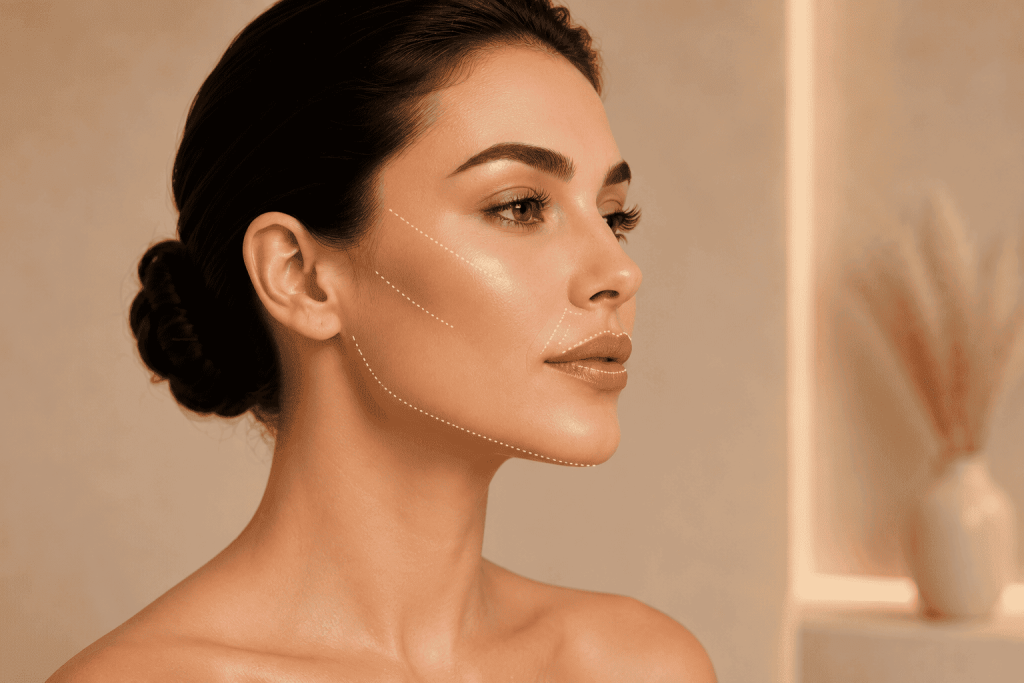
Areas that may be considered include:
- Cheeks: Restoring selected areas of reduced fullness or improving cheek contour.
- Lips: Adding volume, defining the border or refining proportions.
- Nasolabial folds: Softening suitable folds between the nose and mouth.
- Marionette lines: Addressing selected depressions near the corners of the mouth.
- Chin and jawline: Improving definition or facial balance in appropriate candidates.
The American Society of Plastic Surgeons’ guide to filler types explains why product properties influence treatment choices.
Under-eye hollows require additional assessment. This area has complex vascular anatomy, and its suitability should not be assumed from a photograph or a general description of tired-looking eyes. Ask why the proposed product and treatment are appropriate for that specific area.
You can also ask the clinician to explain how each proposed injection relates to your goal. Treating several areas should have a clear rationale; it should not simply follow a package offer.
4. Check Suitability and Prepare for Your Consultation
Before treatment, discuss your medical conditions, allergies, medicines and supplements. Mention previous fillers, facial implants, cosmetic procedures and a history of cold sores, particularly if treatment around the lips is being considered.
The American Academy of Dermatology’s preparation advice recommends sharing this information and asking about side effects, experience and costs.
Do not stop prescribed aspirin, anticoagulants or other medicines on your own. Some medicines can increase bruising, but any change must be agreed with the clinician responsible for your care. The AAD’s advice on improving filler outcomes notes that a medicine may not need to be stopped.
Active infection or inflammation at the planned injection site should be addressed before proceeding. Pregnancy, breastfeeding, bleeding disorders and significant allergies also require discussion; filler safety during pregnancy and breastfeeding has not been established.
For a consultation about dermal fillers in Dubai, useful questions include:
- What is the exact product, and why does it suit my goal?
- What change is realistic for my anatomy?
- Who will perform the injections, and what is their relevant experience?
- What are the risks for this area, and how would a complication be managed?
- What does the quote include, and how will follow-up work?
5. Know What to Expect During Treatment and Recovery

After assessment and consent, the clinician prepares the area and injects the selected product using a needle or cannula. Anaesthetic cream, local anaesthesia or lidocaine within the filler may help with comfort. Injection time varies with the treatment plan; the AAD’s filler FAQs describe many treatments as taking approximately 15–30 minutes, with additional time needed for preparation.
HA and many CaHA treatments produce an early visible change. Initial swelling can alter the appearance, so the immediate result should not be treated as the final assessment. PLLA develops more gradually as collagen production changes.
Aftercare That Fits Your Product
Follow the written instructions for the filler and area treated. General advice includes:
- Avoid intense exercise for the first 24–48 hours, or for the period your clinician recommends.
- Avoid unnecessary rubbing or pressure on the treated area.
- Ask whether massage is required. Some PLLA protocols include it; this should not become a routine for every filler.
- Protect the treated skin from excessive sun exposure and avoid tanning.
- Keep your follow-up appointment and contact the clinic if recovery is worsening rather than improving.
The American Society of Plastic Surgeons’ recovery guidance explains that recovery differs between patients and products. Allow for visible swelling or bruising when planning treatment around an event.
6. Understand the Risks and When to Seek Help
Filler injections are medical procedures. Appropriate training, product selection and technique help reduce risk, but do not eliminate it.
Expected Effects and Other Complications
Swelling, bruising, redness and tenderness can occur after injections. Other possible complications include infection, persistent lumps, delayed inflammation, allergic reactions, asymmetry and movement of the filler. New or persistent symptoms should be assessed rather than covered up or treated at home. The ASPS filler safety guidance discusses these risks.
Rare but Serious Vascular Complications
Filler can accidentally enter a blood vessel and impair circulation. This can cause tissue damage and, in rare cases, vision loss or stroke.
Seek immediate medical attention for unusual or worsening pain, white, grey or blue skin near the injection site, any change in vision, or sudden symptoms such as facial weakness or difficulty speaking. Do not wait for a routine follow-up. The FDA’s filler safety advice identifies these warning signs.
Can Filler Be Dissolved?
Hyaluronidase can break down HA filler when clinically indicated. CaHA and PLLA cannot be reversed with this enzyme. Dissolving is itself a medical treatment, and it does not guarantee reversal of every complication.
The American Society for Dermatologic Surgery’s clinical recommendations discuss hyaluronidase and the importance of prompt complication management. For planned correction of unwanted HA filler, read our filler dissolving in Dubai guide.
7. Compare the Full Cost of Dermal Fillers in Dubai
The cost depends on the product, amount used, number of areas and clinician’s treatment plan. A price per syringe does not necessarily describe the total cost of achieving your goal.
Ask for a written quote showing the proposed product and quantity, consultation fees, and whether review appointments or later adjustments are included. For a collagen-stimulating treatment, clarify whether the quote covers one session or the recommended course.
The American Society of Plastic Surgeons’ cost guidance identifies product and practitioner-related factors that influence pricing. Its US prices should not be treated as a Dubai clinic quotation.
Contact Derma One Sparkle for current pricing based on an assessment. The consultation should help you understand both the proposed result and the total treatment commitment.
Frequently Asked Questions
Are dermal filler injections painful?
You may feel a brief sting or pressure. Comfort measures depend on the product and area. Tell the clinician about any allergy to local anaesthetics before treatment.
How much filler will I need?
There is no single quantity that suits everyone. Ask the clinician to explain the proposed amount for each area and whether a staged approach would be appropriate.
Will the result look natural?
A conservative plan can help preserve facial proportions. Natural-looking results depend on appropriate selection and placement; adding more product is not automatically better.
Will I need maintenance appointments?
Most fillers provide temporary results. Review the remaining effect before adding more, rather than automatically repeating the original quantity on a fixed calendar date.
Can fillers be combined with other aesthetic treatments?
Different procedures may address different concerns, but the combination and timing need individual planning. Ask the clinician to explain the purpose, sequence and risks of each proposed treatment.
Plan Your Next Step at Derma One Sparkle
A consultation for dermal fillers in Dubai is an opportunity to discuss your concerns, compare suitable products and understand recovery and costs. Bring questions, explain the changes you would like to see, and ask for a plan that fits your facial features.
Arrange your consultation with Derma One Sparkle to explore the available options and make an informed decision

3 Comments
[…] If you are considering future treatment, read our guide to dermal fillers in Dubai. […]
[…] Dermal fillers restore volume and contour specific areas of the face. A thread lift physically repositions tissue and stimulates collagen. The two treatments are highly complementary and are frequently combined as part of a comprehensive facial rejuvenation plan. […]
[…] guides to dermal fillers in Dubai and filler dissolving in Dubai explain these topics […]