
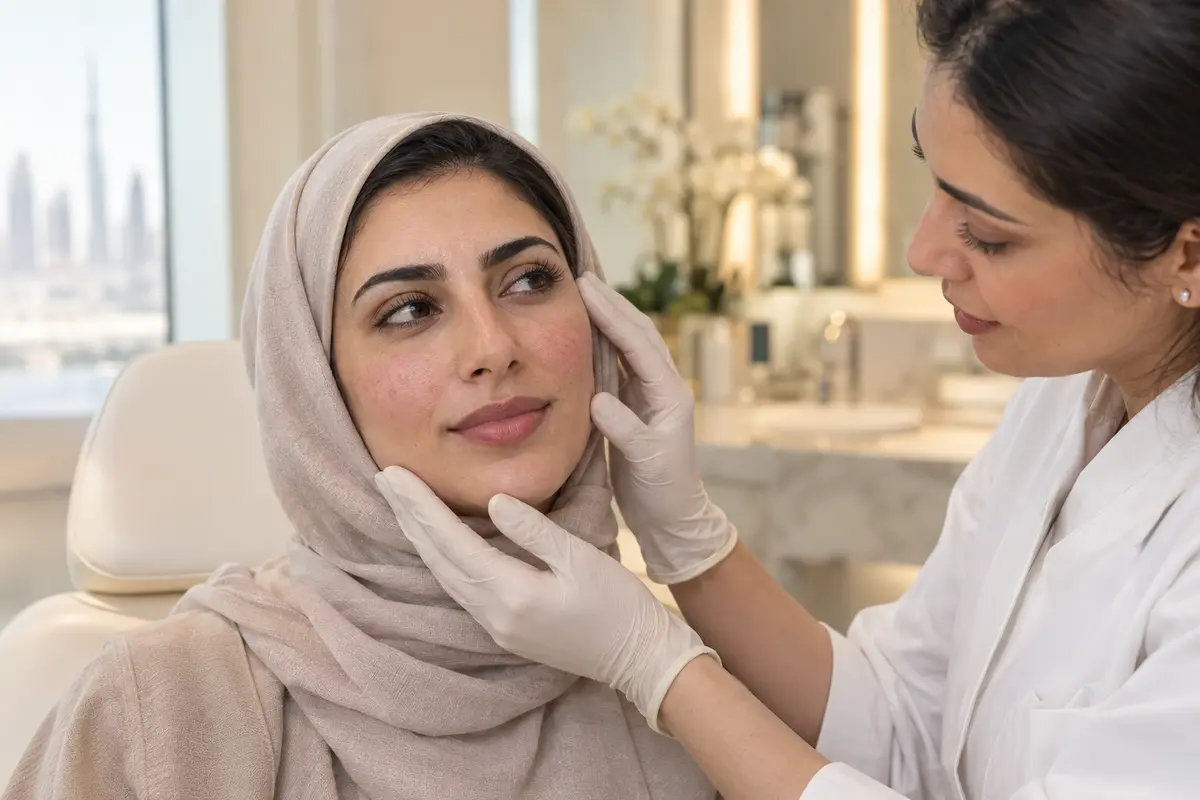
Sensitive skin can make an ordinary skincare routine unexpectedly complicated. A cleanser may leave the face tight, a new serum may sting, or time outdoors may be followed by redness and discomfort.
For people concerned about sensitive skin in Dubai, heat, strong sunlight, humidity, air conditioning and frequent environmental changes may add to the challenge. However, skin conditions, an impaired barrier, unsuitable products and overuse of active ingredients can also contribute.
Sensitive skin is not a diagnosis by itself. Persistent burning, itching, scaling or redness may indicate contact dermatitis, eczema, rosacea or another condition requiring assessment. This guide explains common triggers and how to build a gentler routine without assuming the cause.
Table of Contents
Sensitive Skin at a Glance
| Question | Short answer |
|---|---|
| What does sensitive skin feel like? | It may sting, burn, itch, feel tight or become uncomfortable after exposure to products or environmental triggers. |
| Does sensitive skin always look red? | No. Unpleasant sensations can occur even when there are few visible changes. |
| Is sensitive skin the same as dry skin? | No. Dryness can increase sensitivity, but oily and combination skin can also be sensitive. |
| Should every reaction be called an allergy? | No. Irritation and allergic contact dermatitis are different reactions and may need different evaluation. |
| Can skincare help? | A gentle cleanser, suitable moisturiser, daily sun protection and fewer irritating products may help support the skin barrier. |
| When is professional advice important? | Seek assessment for persistent, severe, painful, spreading or recurrent symptoms, or when the cause is unclear. |
What Is Sensitive Skin?
Sensitive skin generally describes skin that develops unpleasant sensations in response to stimuli that would not normally cause discomfort. These sensations may include stinging, burning, itching, pain, tingling or tightness. An international expert group published a formal definition of sensitive skin based on these features in a peer-reviewed position paper indexed by PubMed.
Some people experience symptoms with little visible change. Others notice temporary redness, dryness, roughness or small areas of irritation. Sensitivity may affect the whole face or appear mainly around the eyes, nose, mouth or cheeks. It may be constant, occasional or linked to a particular product, season or environment.
Some people naturally have more reactive skin. In other cases, sensitivity develops after harsh cleansing, excessive exfoliation, sun exposure, cosmetic procedures or an inflammatory condition. Two people may describe the same burning sensation but have different triggers and skincare needs.
Common Signs of Sensitive Skin
People with sensitive skin may experience one or several of the following:
- Stinging or burning after applying skincare or makeup
- Redness that appears easily or lasts longer than expected
- Tightness, particularly after cleansing
- Itching or general discomfort
- Dry, rough, flaky or scaly areas
- Sensitivity to heat, wind, sweat or sudden temperature changes
- Reactions after using fragrance, exfoliating acids or retinoids
- Discomfort after shaving, waxing or other hair-removal methods
These signs are not specific to one condition. Contact dermatitis can cause itchy, dry, cracked or blistered skin, according to the UK National Health Service. Rosacea and eczema may also cause sensitivity, so a recurring rash should not be managed indefinitely through trial and error.
Why Sensitive Skin in Dubai May Feel More Reactive
Living in Dubai does not automatically cause sensitive skin, but the environment and daily routine can influence how reactive skin feels. A worldwide review of patient-reported triggers found that temperature changes, heat, wind, sun, air conditioning, humidity and dry air were among the physical factors associated with sensitive-skin symptoms. The findings are summarised in this systematic review indexed by PubMed.

Heat and Perspiration
Hot weather can increase sweating. Perspiration, friction from clothing or masks and repeated wiping may feel uncomfortable when the skin barrier is already irritated. Sweat may also make fragranced products or residue on the skin more noticeable.
Humidity Outdoors and Air Conditioning Indoors
Moving repeatedly between hot, humid outdoor air and cool, air-conditioned rooms creates rapid environmental changes. Air conditioning may also contribute to a dry-feeling indoor environment.
For practical guidance on adapting a routine locally, see our article on how the Gulf climate affects your skin.
Strong Sun Exposure
Sun exposure can aggravate redness and may make an already irritated complexion feel more uncomfortable. Sun protection is important for every skin type, but the formula must also be tolerable enough to use consistently.
Our guide to sun protection in Dubai explains why year-round protection matters.
Frequent Cleansing
Some people cleanse more often because of sweat, sunscreen or time spent outdoors. Washing too frequently, using hot water or choosing a harsh foaming cleanser may strip surface lipids and worsen tightness.
The aim is to remove dirt, sunscreen and makeup without leaving the skin squeaky-clean or uncomfortable.
Sensitive, Dry, Irritated or Allergic: What Is the Difference?
These terms are often used interchangeably, but they do not mean exactly the same thing.
| Concern | Typical pattern | Important point |
|---|---|---|
| Sensitive skin | Stinging, burning, itching or tightness after otherwise ordinary triggers | May occur with or without visible redness |
| Dry skin | Roughness, flaking, tightness and reduced moisture | Dryness can weaken barrier function and increase reactivity |
| Irritant contact dermatitis | Burning, soreness, dryness or cracking after direct damage from an irritant | Does not require an allergy |
| Allergic contact dermatitis | Itchy, red or swollen rash after immune sensitisation to an ingredient | A dermatologist may recommend medical patch testing |
| Rosacea or eczema | Recurrent inflammation with characteristic patterns | Requires an accurate diagnosis and condition-specific plan |
Dry and sensitive skin frequently overlap, but they are not identical; oily skin can react too. If flaking and dehydration are the main concerns, see our guide to dry skin treatment in Dubai.
Not every reaction is an allergy. Irritation can result from concentration, frequency, friction or barrier damage; allergy involves an immune response to a substance. Medical patch testing may be recommended when allergic contact dermatitis is suspected.
Common Triggers of Sensitive Skin
Fragrance and Fragranced Products
Fragrance can be a trigger, particularly when skin is already reactive. Check cleansers, moisturisers, sunscreen, makeup and hair products that touch the face.
“Unscented” is not always the same as “fragrance-free”; it may include ingredients that mask an odour.
The US Food and Drug Administration’s information on fragrance in cosmetics advises fragrance-sensitive consumers to consider fragrance-free products and check ingredient lists carefully.
Over-Exfoliation
Combining exfoliating acids, scrubs, cleansing brushes or peels can overwhelm the skin. Warning signs include persistent tightness, burning when plain moisturiser is applied and sudden sensitivity to previously tolerated products.
Introducing Too Many Active Ingredients
Retinoids, exfoliating acids, vitamin C formulas and acne treatments may irritate when introduced too quickly or combined without a plan.
Introduce one change at a time. This makes it easier to determine which product caused a reaction.
Harsh Cleansing and Hot Water
Strong soaps, hot water and vigorous rubbing can remove protective surface oils. Cleanse gently with lukewarm water and pat the face dry.
Friction and Hair Removal
Scrubbing, tight masks, facial tools, shaving and waxing can create friction. Pause optional treatments when skin is burning or inflamed.
Cosmetic Procedures
Peels, lasers and microneedling interact with the skin, so suitability, settings and aftercare must be individualised.
Tell your practitioner about previous reactions, skin conditions, medication and active products before undergoing a procedure.
A Simple Routine for Sensitive Skin in Dubai
A complicated routine is not automatically a better routine. When the skin is reactive, consistency and tolerability usually matter more than the number of steps.
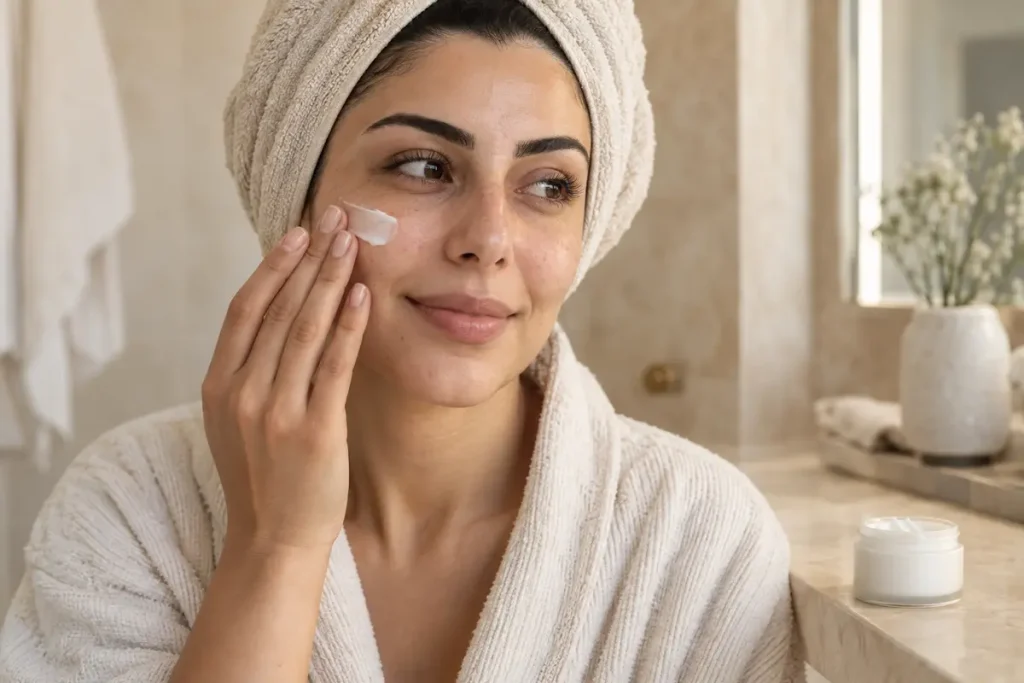
Morning Routine
- Cleanse gently if needed. Some people prefer a mild cleanser in the morning; others may only need lukewarm water. Choose according to oiliness, comfort and professional advice.
- Apply a simple moisturiser. Look for a texture that suits your skin without fragrance or unnecessary active ingredients.
- Use broad-spectrum sun protection. Choose a sunscreen you can apply generously and consistently. If one formula stings, ask a qualified professional about alternatives rather than giving up sunscreen completely.
- Keep makeup simple during a flare. Fewer layers make it easier to identify what the skin tolerates.
Evening Routine
- Remove makeup and sunscreen without aggressive rubbing. A single gentle cleanser may be enough; heavy or water-resistant products may require a carefully selected first cleanse.
- Apply prescribed treatment only as directed. Do not add extra applications in an attempt to speed up results.
- Moisturise while the skin is slightly damp. This can help support hydration and reduce a tight feeling.
- Pause non-essential active ingredients if irritation develops. Persistent symptoms should be assessed rather than repeatedly covered with new products.
How to Introduce a New Product
Test one new product at a time. The American Academy of Dermatology’s product-testing guidance recommends applying a product to a small test area twice daily for seven to ten days, using it for the same length of time it would normally remain on the skin.
Stop and wash the product off if a reaction develops.
This type of home-use test may reveal irritation, but it does not replace dermatologist-supervised patch testing for suspected allergy.
How to Choose Products Without Relying on Marketing Claims
Front-label terms are not guarantees. The FDA explains that there is no US federal standard governing the term “hypoallergenic”. You can read its guidance on hypoallergenic cosmetic claims.
Consider the complete formula and your own history:
- Prefer shorter, simpler routines while identifying triggers
- Choose fragrance-free products if fragrance has caused problems
- Avoid scrubs and cleansing tools when the skin is irritated
- Select a gentle cleanser that does not leave persistent tightness
- Use a moisturiser appropriate for your skin type and climate
- Introduce only one new active ingredient at a time
- Keep a note of the product, date and reaction if sensitivity recurs
Moisturisers may combine water-attracting humectants, smoothing emollients and occlusives that reduce moisture loss. No single ingredient suits everyone, so personal tolerance matters.
What to Do During a Sudden Flare
If a product causes burning, redness or itching:
- Stop using the suspected product.
- Rinse it away gently with lukewarm water if it is still on the skin.
- Avoid scrubs, acids, retinoids and fragranced products until the skin settles.
- Use a previously tolerated, simple moisturiser if comfortable.
- Avoid trying several “rescue” products at once.
- Seek professional advice if symptoms are severe, spreading, recurrent or not improving.
Do not apply prescription steroid creams to the face without medical guidance. The correct treatment depends on whether the problem is irritation, allergy, eczema, rosacea, infection or another condition.
Urgent medical care is appropriate if a reaction involves difficulty breathing, swelling of the lips or tongue, widespread blistering, severe facial swelling, faintness or other signs of a serious allergic reaction.
Professional Assessment and Treatment Options
There is no universal “sensitive skin treatment” because management depends on the cause. A professional assessment may review:
- When the symptoms began
- Which areas are affected
- Products, medication and procedures used recently
- Whether symptoms are immediate or delayed
- A history of eczema, rosacea, allergies or asthma
- Occupational or environmental exposures
- Signs of infection or another skin disorder
The first step may be a temporary minimalist routine that reduces possible irritants and supports the skin barrier.
A diagnosed condition may need specific skincare or prescription medication, while suspected allergic contact dermatitis may require medical patch testing.
Consider aesthetic procedures only after assessment and control of active irritation. A treatment suitable for resilient skin may be inappropriate during a flare.
When Should You Seek Professional Advice?
Arrange an assessment if:
- Redness, burning, itching or scaling persists
- Reactions occur repeatedly and the trigger is unclear
- Symptoms interfere with sleep or daily activities
- The rash affects the eyelids, lips or a large area
- The skin cracks, weeps, crusts or develops signs of infection
- Over-the-counter products make the problem worse
- You suspect rosacea, eczema or contact allergy
- You are considering a procedure while the skin is reactive
Early evaluation can prevent months of product switching and help distinguish ordinary sensitivity from a condition requiring treatment.
Frequently Asked Questions About Sensitive Skin in Dubai
Final Takeaway
Managing sensitive skin in Dubai starts with identifying patterns, reducing unnecessary irritation and building a routine the skin can tolerate consistently.
Gentle cleansing, a suitable moisturiser, daily sun protection and cautious product testing form a sensible foundation, but persistent sensitivity should not be self-diagnosed.
If reactions keep returning or you are unsure which products or treatments are appropriate, contact Sparkle Clinic to ask about a personalised skin assessment.
This article is for general education and does not replace medical diagnosis or treatment. Individual recommendations depend on your symptoms, medical history and professional assessment.

4 Comments
[…] guide to Sensitive Skin in Dubai: Signs, Triggers & Care Guide explains how environmental factors and skincare habits can influence sensitive […]
[…] skin deserves individual evaluation. Our guide to sensitive skin in Dubai explains why persistent redness or burning may need a diagnosis before an aesthetic procedure. Do […]
[…] your skin is naturally reactive, the guidance in Sensitive Skin in Dubai can help you build a gentler […]
[…] your skin reacts easily to products or treatments, read our guide to Sensitive Skin in Dubai: Causes, Triggers & Care Guide before choosing stronger exfoliating […]