
Hair thinning may appear as a wider part, receding hairline, or unusual shedding. The first step is finding out why it is happening.
Hair loss treatment in Dubai may involve medicines, scalp procedures, or both. PRP may improve density for some people with pattern hair loss; exosome treatments remain under study, while mesotherapy depends on the ingredients used.
This guide compares the options, realistic results, and the role of established medical treatments.
Table of Contents
Hair Loss Treatment in Dubai: At a Glance
| Option | What it involves | What the evidence suggests |
|---|---|---|
| PRP | Platelet-rich plasma from your blood injected into selected scalp areas. | May improve density for some people with pattern hair loss; study results vary. |
| Exosomes | An exosome-containing preparation delivered according to its formulation. | Early human results are promising; larger, longer studies are needed. |
| Mesotherapy | Small scalp injections of a selected formulation. | Results depend on the ingredients; evidence for one mixture does not validate all others. |
The key point: a diagnosis and the exact products matter more than the number of treatments in a package.
Why Is Your Hair Thinning?
Androgenetic alopecia, or pattern hair loss, usually develops gradually as a widening part, thinning crown, or receding hairline. It affects women and men and can progress for years, so a one-time procedure may not address the ongoing process.
Telogen effluvium is increased shedding that may follow illness, childbirth, stress, or rapid weight change. Other causes include alopecia areata, scalp inflammation or infection, tight hairstyles, medicines, and nutritional or hormonal problems. Causes can overlap, making the pattern of shedding and the timing of symptoms important clues.
The American Academy of Dermatology (AAD) describes asking when loss began, examining the scalp and hair, and considering blood tests or a biopsy when indicated. Some shedding resolves after a trigger ends; other conditions benefit from early treatment to limit further loss.
Sudden or patchy loss, pain, redness, scaling, or scarring calls for medical assessment before a cosmetic procedure. A scarring condition can damage follicles permanently if treatment is delayed.
PRP for Hair Loss: How Effective Is It?
PRP stands for platelet-rich plasma. A small blood sample is collected and processed to concentrate platelets in the plasma. A trained clinician injects it into selected scalp areas to support existing follicles; it cannot create new follicles where scarring has destroyed them.
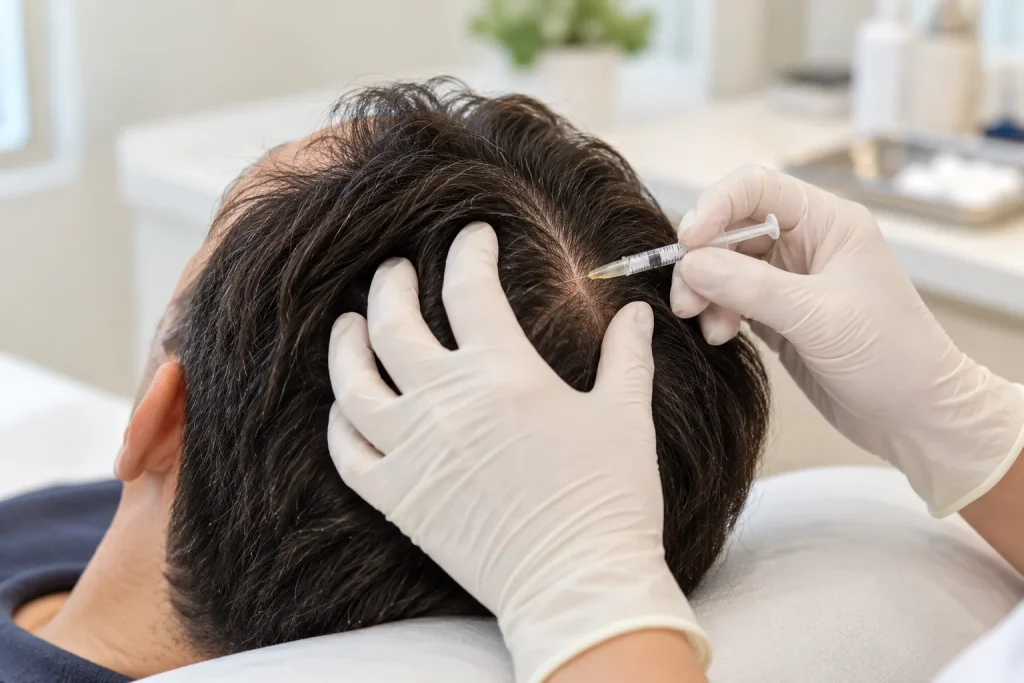
PRP is the best studied of these three options for pattern hair loss. A 2024 systematic review of randomised trials found improved hair density compared with controls, but graded the certainty as low because methods and results varied and studies had potential bias. It did not establish a reliable improvement in hair thickness.
Some patients notice less shedding or greater density over time; others see little change. Diagnosis, PRP preparation, treatment schedule, and concurrent medicines affect outcomes. Improvement in a photograph may also reflect styling or lighting, which is why a consistent way of measuring progress is useful.
Is PRP Enough on Its Own?
PRP can be used alone in selected cases, but it may not be enough to manage ongoing pattern hair loss. Topical minoxidil is an established treatment for men and women. Men may also discuss prescription finasteride; a dermatologist may consider spironolactone for selected women. Suitability, side effects, pregnancy plans, and ongoing use all matter.
PRP may be considered alongside medical treatment rather than replacing it automatically. A 2024 review of five randomised trials suggested that adding PRP to topical minoxidil could improve hair density, but graded the evidence very low quality because studies were small and at risk of bias. Discuss a plan that addresses the cause and includes a way to assess progress.
Exosomes for Hair Loss: What Do We Know?
Exosomes are tiny particles released by cells that carry biological signals. Researchers are studying whether particular preparations can support hair growth, but “exosomes” does not describe one standard treatment. The biological source and processing method can change what is in a preparation.
Preparations vary in source, concentration, other ingredients, and delivery. A product applied to the surface is not equivalent to one used with microneedling or injected into the scalp. Evidence for one route or formulation cannot simply be transferred to another, nor can results for pattern loss be assumed to apply to every cause of shedding.
A clinical review identified nine hair-loss studies involving 125 exosome recipients and called for larger trials and consistent manufacturing standards. A second systematic review found encouraging changes in some hair measures, but also noted different products, small samples, and inconsistent follow-up.
Long-term benefit and safety remain uncertain. A useful consultation identifies the formulation, delivery method, evidence relevant to that specific preparation, and its status for the proposed use in Dubai.
Hair Mesotherapy: The Ingredients Matter
Mesotherapy is a method of delivering substances through small scalp injections, not a single medicine. Ingredients, concentrations, and schedules vary, so the word itself cannot predict whether a particular formula will help.
A systematic review found positive signals in some mesotherapy studies, but insufficient data for firm conclusions. A product comparison found that outcomes varied by formulation; one tested mixture cannot validate every scalp cocktail.
For vitamin-containing mixtures, the ingredient list and the reason for using each component matter. Scalp injections do not replace diagnosis and treatment of a genuine nutritional deficiency. The AAD recommends evaluation before supplementation, since extra nutrients do not automatically improve hair growth.
Does Combining All Three Work Better?
A combined plan needs a clear purpose for each component.
A starting treatment and review date can make it easier to judge whether another step is useful. For someone with pattern loss, that may mean beginning with medical management and considering a procedure for a defined goal, such as improving density.
Who May Benefit From a Scalp Treatment?
Someone with early or moderate pattern thinning and remaining follicles may be a reasonable PRP candidate. The extent of thinning, scalp health, previous treatment response, medical history, and realistic goals shape the plan. Advanced or scarring loss calls for a different discussion.
Exosome or mesotherapy suitability depends on the formulation, method of delivery, and diagnosis, even when PRP is an option. The presence of a treatment on a clinic menu does not mean it fits every pattern of hair loss.
Inflammatory scalp disease, alopecia areata, a recent illness, or a suspected deficiency may require treatment of the cause first. Suspected scarring alopecia needs prompt specialist evaluation because continued inflammation can permanently damage follicles.
Pregnancy or breastfeeding, bleeding conditions, allergies, medicines, supplements, earlier scalp procedures, and active infection can affect safety or timing. Do not stop a prescribed medicine without advice from the responsible clinician.
What Happens During a Hair Consultation and Treatment?
An appointment begins with the history and pattern of thinning, a scalp examination, and tests or referral when needed. Bringing a list of medicines and treatments already tried helps identify what has or has not helped, and whether a current treatment should continue.
For PRP, a blood sample is collected and processed before the plasma is injected into selected areas. Exosome or mesotherapy appointments depend on the formulation and delivery method. The sequence, time needed, and aftercare can differ, so a single timetable cannot describe every version of these procedures.
Before committing to a course, get written information on side effects, scalp care, when usual hair products can be resumed, the planned review date, and total cost. A quotation should make clear what the course includes and whether follow-up is separate.
When Can You Expect Results?
Hair growth is slow. For PRP, the AAD notes that repeat appointments are common and some patients first notice less shedding over the initial months. An early change in shedding is different from a measured increase in density. In research, density is generally assessed over months, not immediately after an injection.
Visible regrowth after one visit cannot be promised. Concurrent use of another effective treatment can make a change hard to attribute to one procedure. For exosomes or mesotherapy, the estimate also depends on the preparation and protocol. Less shedding, better coverage, and increased density are different outcomes worth distinguishing at follow-up.
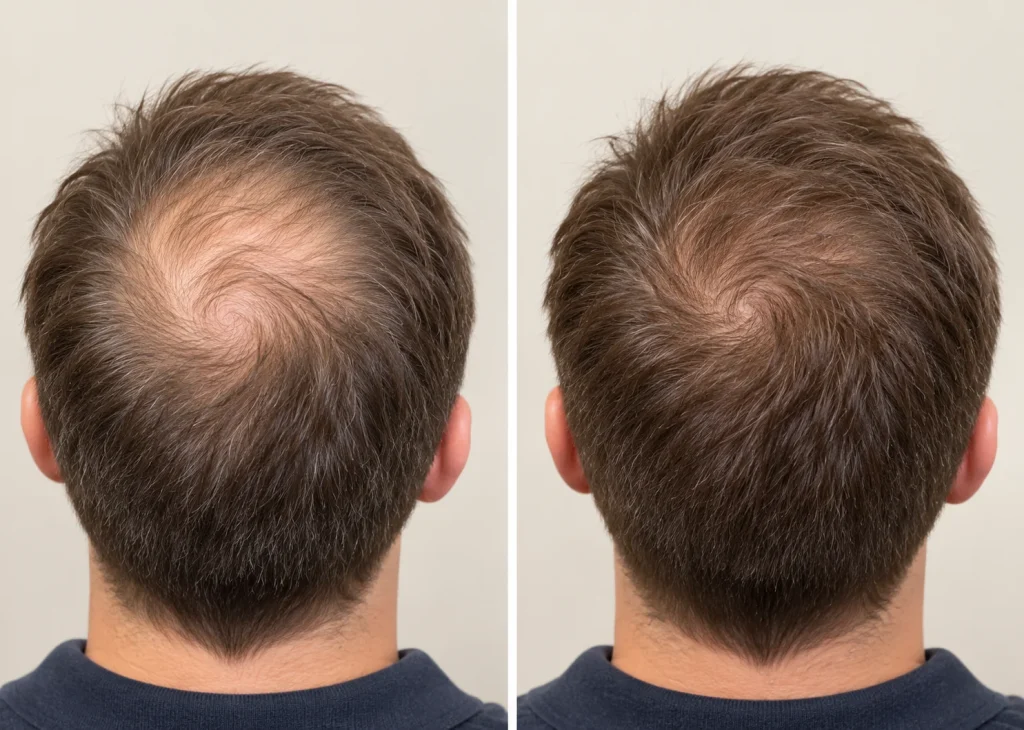
At the agreed review point, compare photographs of the same scalp area under similar lighting and hair positioning. An examination or hair-density measurements, where available, can help distinguish improvement from a styling change.
Safety and Aftercare
Scalp injections may cause temporary tenderness, redness, swelling, pinpoint bleeding, or bruising. An infection or allergic reaction is possible even when a procedure is usually well tolerated, which is why a clear aftercare contact matters.
PRP uses your own blood, but safe collection, processing, and injection still matter. Mesotherapy risks depend on its ingredients and technique. For exosomes, source, manufacturing, storage, and delivery are relevant; a clinical review calls for stronger evidence and consistent standards before broad safety claims can be made.
Follow the instructions for your procedure on washing, scalp products, exercise, and heat exposure. Contact the clinic for worsening pain, redness, warmth, swelling, discharge, or fever. Seek urgent help for breathing difficulty, faintness, or lip or tongue swelling.
Questions to Ask Before Choosing Hair Loss Treatment in Dubai
- What is the cause of my hair loss, and do I need tests?
- Which medicines or procedures have evidence for my diagnosis?
- If exosomes or mesotherapy are proposed, what formulation and method will be used?
- How will we measure progress, and when?
- What are the risks, recovery, full cost, and follow-up plan?
Frequently Asked Questions
Is mesotherapy the same as PRP?
No. PRP is prepared from the patient’s own blood. Mesotherapy refers to how selected substances are delivered into the scalp. You need to know the actual mesotherapy ingredients to judge the evidence and risks.
How many sessions will I need?
There is no universal number. PRP commonly involves a series and possible maintenance; exosome and mesotherapy schedules vary. Agree on a review point before committing.
Will these treatments cure hereditary hair loss?
No. Hereditary pattern loss can continue, so any improvement may require ongoing management. See “Is PRP Enough on Its Own?” above.
Can women have PRP or other scalp treatments?
Women may discuss PRP after the cause is diagnosed. Childbirth, pregnancy, breastfeeding, medicines, and scalp health can change the plan.
Should I stop minoxidil before PRP?
Do not stop prescribed or ongoing treatment on your own. Review your minoxidil regimen and procedure aftercare with your treating clinician.
Choose a Plan Based on Your Diagnosis
For pattern hair loss, discuss medical treatment and whether PRP adds value. Exosome evidence is early; mesotherapy depends on the formulation.
At Derma One Sparkle, book a hair consultation or contact the clinic to review your options and next steps.
This article provides general information and does not replace an individual medical diagnosis or treatment plan. Product details and suitability must be confirmed with the treating clinician