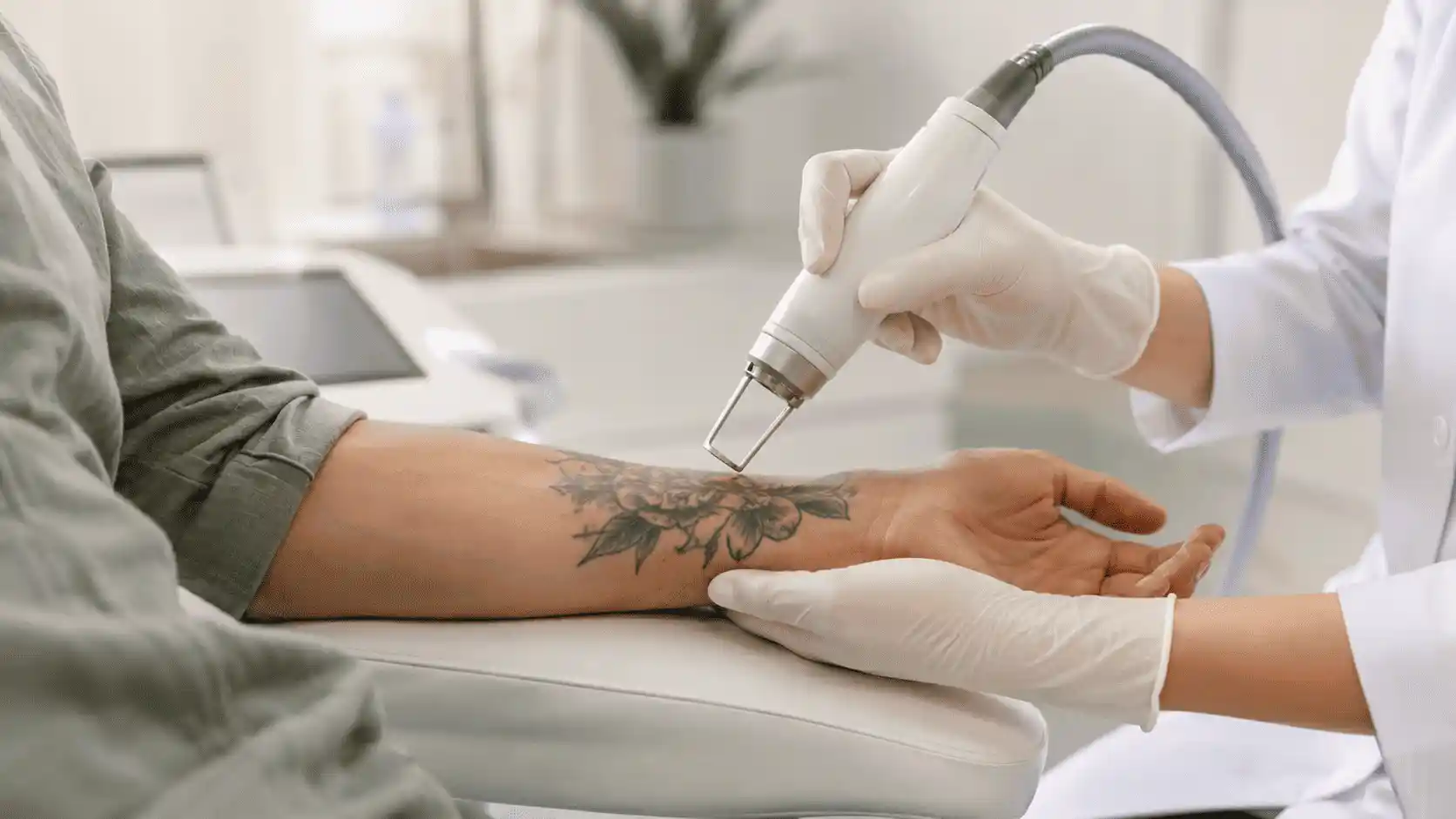
Laser tattoo removal in Dubai is a popular option for people who want to fade or remove an unwanted tattoo. Whether your tattoo no longer reflects your style, has changed in appearance, or needs to be lightened before a cover-up, modern laser technology may offer a controlled treatment option.
However, tattoo removal is not usually completed in a single visit. The process depends on the tattoo’s colours, depth, density, location, age and your individual skin characteristics. A professional consultation is therefore essential before beginning treatment.
This guide explains how laser tattoo removal works, how many sessions may be needed, what results you can realistically expect, and how to care for your skin before and after each appointment.
Table of Contents
How Laser Tattoo Removal in Dubai Works?
Tattoo ink is placed within the deeper layer of the skin, which is why it does not disappear naturally like a temporary surface mark.
During laser tattoo removal, carefully selected pulses of light are directed toward the tattoo pigment. The pigment absorbs the laser energy and breaks into smaller particles. Over time, the body’s natural immune processes gradually clear some of these particles.
The laser does not simply erase the tattoo during the appointment. Instead, each treatment breaks down part of the pigment, and the tattoo typically fades progressively between sessions.
Different ink colours absorb different wavelengths of light. For this reason, a multicoloured tattoo may require different settings or laser wavelengths during the treatment programme.
The US Food and Drug Administration explains that laser tattoo removal commonly requires multiple treatments, with sufficient time between appointments for the skin to heal.
How Many Laser Tattoo Removal Sessions Are Needed?
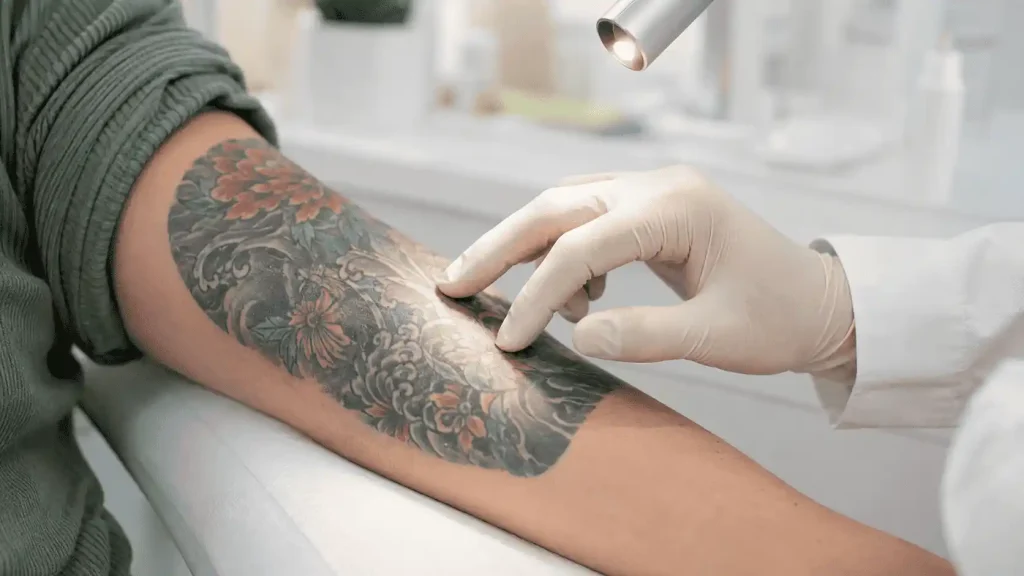
The number of sessions needed for laser tattoo removal in Dubai varies according to the tattoo’s size, colours, depth, age and the individual response to treatment.
There is no single number of sessions that applies to every tattoo.
Some tattoos may fade noticeably after a few appointments, while others require a longer series of treatments. Complete removal is not always possible, and a faint outline or residual pigment can sometimes remain.
The expected number of sessions is influenced by several factors.
Tattoo Colour
Black and dark blue pigments often respond more predictably because they absorb commonly used laser wavelengths efficiently.
Colours such as green, yellow, red and certain pastel shades may be more challenging. Multicoloured tattoos can require a more complex treatment plan because one laser wavelength may not effectively target every pigment.
White, skin-coloured and some cosmetic tattoo pigments require particular caution. Certain pigments can darken after laser exposure instead of becoming lighter. A careful assessment or test spot may therefore be recommended before treating the entire area.
Tattoo Density and Depth
Professional tattoos are usually applied with greater pigment density and at a more consistent depth than many amateur tattoos. Because they may contain more ink, professional tattoos can require more sessions.
Tattoos that have been retouched or covered with additional designs also contain several layers of pigment. These layers cannot be treated aggressively in one visit without increasing the risk of damaging the surrounding skin.
Age of the Tattoo
Older tattoos have often faded naturally over time and may respond differently from recently applied tattoos. A new tattoo must be completely healed before removal can be considered.
The clinical team should examine the skin and decide when it is appropriate to begin treatment rather than relying on a fixed waiting period.
Tattoo Location
The body’s natural clearing process plays an important role after the laser breaks down the pigment. Tattoos located in areas with stronger circulation may sometimes respond differently from tattoos on more distant areas such as the hands, feet or ankles.
Location also affects aftercare because certain areas experience more friction from clothing, footwear or everyday movement.
Skin Type and Previous Skin Response
Skin tone must be considered when selecting laser settings. The surrounding skin also contains melanin, and overly aggressive treatment may cause burns or unwanted changes in pigmentation.
People with medium to darker skin tones can still be considered for laser treatment, but the wavelength, energy level and treatment interval must be selected carefully. A conservative approach can help reduce the likelihood of post-inflammatory hyperpigmentation or hypopigmentation.
Previous reactions to laser treatments, a history of raised scars and the presence of existing skin conditions should also be discussed during the consultation.
Lifestyle and General Health
Smoking, frequent sun exposure, certain medical conditions and some medications may influence healing or treatment suitability.
A healthy immune response helps the body process fragmented tattoo pigment. Always provide the clinician with an accurate medical history and a list of medications or supplements you currently use.
What Results Can You Expect?
Results from laser tattoo removal in Dubai develop gradually because the body needs time to clear fragmented ink particles.
Laser tattoo removal results are gradual. After each suitable session, the tattoo may become lighter, less defined or more fragmented.
Some parts of the design may fade faster than others. Dark outlines might respond before resistant colours, or shading may disappear while denser areas remain visible.
Temporary changes immediately after treatment should not be confused with the final result. The skin may initially look white or frosted, followed by redness, mild swelling or sensitivity. The tattoo’s appearance then continues to change as the area heals.
The goal may also differ from one person to another:
- Some people want the tattoo removed as much as safely possible.
- Others only want sufficient fading for a new cover-up tattoo.
- Some want to treat one section while preserving the rest of the design.
- Cosmetic or permanent makeup tattoos may require a specialised treatment plan.
A reputable provider should discuss realistic expectations rather than guaranteeing complete removal within a fixed number of sessions.
Does Laser Tattoo Removal Hurt?
The sensation is often described as a rapid snapping or stinging feeling against the skin. The level of discomfort depends on the tattoo’s location, size, density and individual sensitivity.
Cooling methods or an appropriate numbing option may be considered by the treating professional. Any numbing product should be used only according to clinical instructions, as incorrect application can affect safety.
Appointments for small tattoos may be relatively brief, but treatment time varies with the size and complexity of the tattoo.
Is Laser Tattoo Removal Safe?
When performed by an appropriately trained healthcare professional using suitable technology and settings, laser tattoo removal can be a controlled and effective procedure.
Nevertheless, it is still a medical laser treatment and has potential side effects.
Temporary reactions may include:
- Redness and warmth
- Mild swelling
- Tenderness
- Temporary whitening or frosting
- Small blisters or crusting
- Temporary changes in the tattoo’s appearance
Less common complications can include:
- Infection
- Burns
- Persistent changes in skin texture
- Scarring
- Darkening of the skin
- Lightening of the skin
- Incomplete or uneven tattoo fading
The American Academy of Dermatology notes that complications are more likely when treatment is performed without adequate medical training.
Never attempt to remove a tattoo using acids, salt, chemical peels or unapproved creams at home. These products generally cannot reach pigment located in the deeper skin and may cause burns, infection or permanent scarring.
Who May Need to Postpone Treatment?
Laser tattoo removal is not automatically suitable for everyone at every time.
Treatment may need to be delayed or avoided when:
- The tattoo or surrounding skin has not fully healed.
- There is an active infection, wound, rash or significant irritation in the area.
- The skin is recently tanned or sunburned.
- You are pregnant or breastfeeding.
- You have a history of abnormal or raised scarring.
- You are taking medication that may affect healing or increase light sensitivity.
- You have a health condition that may interfere with healing or immune function.
- The tattoo covers a changing or suspicious mole or skin lesion.
These points do not replace a medical assessment. Eligibility should be determined during an individual consultation.
Preparing for Your Appointment
Good preparation helps the clinician assess your natural skin tone and may reduce avoidable irritation.
Before your session:
- Avoid intentional tanning and protect the area from strong sunlight.
- Do not apply self-tanning products to the treatment area.
- Tell the clinic about medications, supplements, allergies and previous laser reactions.
- Inform the clinician if you have a history of cold sores, raised scars or pigmentation changes.
- Do not use irritating skincare products over the area unless your clinician confirms that they are suitable.
- Arrive with clean skin and avoid applying perfume, oils or heavy creams to the treatment area.
- Follow any shaving or preparation instructions provided by the clinic.
Do not stop prescribed medication without speaking to the clinician who prescribed it.
Dubai’s strong year-round sun exposure makes sun protection particularly important before and between sessions. You can also read our guide to sun protection in Dubai.
Laser Tattoo Removal Aftercare
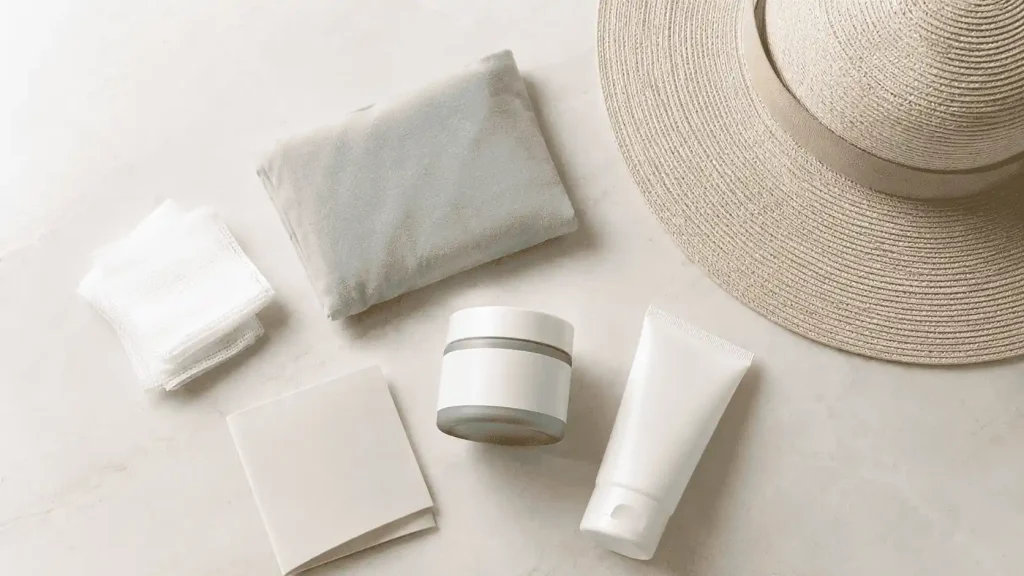
Aftercare instructions can vary according to the laser used, treatment intensity, tattoo location and your skin’s response. Always follow the personalised instructions provided after your appointment.
General aftercare may include:
- Keep the treated area clean and protected as instructed.
- Avoid rubbing, scratching or picking at crusts or blisters.
- Use a wrapped cool compress if recommended; do not place ice directly on the skin.
- Apply only products approved by your treating professional.
- Avoid tight clothing or repeated friction over the area.
- Avoid swimming, saunas, steam rooms and strenuous exercise until the clinician confirms that these activities are suitable.
- Allow any crusting to separate naturally.
- Protect the area from direct sunlight.
- Once the skin surface has healed, use suitable broad-spectrum sun protection as advised.
Contact the clinic promptly if you experience increasing pain, spreading redness, pus, fever, extensive blistering or any reaction that concerns you.
Why Are Sessions Spaced Apart?
The interval between sessions is an important part of the treatment—not simply a delay.
The skin needs time to recover after laser exposure. The body also needs time to process the pigment particles that were broken down during treatment.
Performing sessions too frequently does not necessarily remove the tattoo faster. It may instead increase the risk of irritation, pigment changes, burns or scarring.
Your next appointment should be scheduled according to the condition of your skin and your response to the previous session. The interval may be adjusted throughout the treatment programme.
Laser Tattoo Removal for Darker Skin Tones
Laser tattoo removal must distinguish between tattoo pigment and the natural melanin in the surrounding skin. This requires careful treatment planning for medium and darker skin tones.
Suitable wavelengths and conservative settings may help reduce unnecessary heat absorption by the surrounding skin. Longer intervals or a test spot may also be considered.
The aim is not simply to use the strongest possible setting. The appropriate setting balances tattoo fading with protection of the skin.
Patients should also follow sun-protection instructions carefully because recent tanning can make safe laser treatment more difficult.
Laser Tattoo Removal Versus Tattoo Fading
Complete removal is not the only possible goal.
If you intend to replace the tattoo with a new design, partial fading may give the tattoo artist more flexibility and reduce the need for a very dark or large cover-up.
Tell the clinician whether you want maximum possible removal or only enough fading for a cover-up. This can influence the treatment plan and the point at which sessions are stopped.
Frequently Asked Questions
Can a tattoo be removed in one session?
Usually not. Tattoo ink is placed in layers, and treating all of those layers aggressively in one appointment could damage the surrounding skin. Multiple sessions allow gradual fading and safer healing.
Will the tattoo disappear completely?
Complete removal cannot be guaranteed. Results depend on the ink, colour, depth, location, layering, skin type and individual response. Some tattoos leave faint pigment or a subtle outline.
Which tattoo colours are easiest to remove?
Black and dark blue often respond more predictably. Green, yellow, red, pastel and certain cosmetic pigments can require specialised treatment and may be more resistant.
Can permanent makeup be removed with laser?
Some permanent makeup can be treated, but white, skin-coloured and cosmetic pigments may darken after laser exposure. A professional assessment and, when appropriate, a test spot are important.
Can I expose the area to sunlight after treatment?
The treated skin should be protected from direct sun according to your clinician’s instructions. Sun exposure can increase the risk of pigmentation changes and may delay your next session.
Can I use tattoo-removal cream instead?
The FDA has not approved tattoo-removal creams or do-it-yourself kits. These products may irritate or burn the skin without reaching tattoo pigment in the deeper layer.
When can I have my next session?
The next session should be scheduled only after sufficient healing. Your clinician will determine the appropriate interval based on the treated area and your skin’s response.
Book a Laser Tattoo Removal Consultation in Dubai
A consultation is the best way to understand what may be achievable for your tattoo. The assessment should consider the colours, pigment density, tattoo age, location, skin tone, medical history and your preferred outcome.
Learn more about tattoo removal at Derma One Sparkle Clinic or contact us to arrange a personalised assessment.
This article is provided for general educational purposes and does not replace an individual medical consultation, diagnosis or treatment plan.